
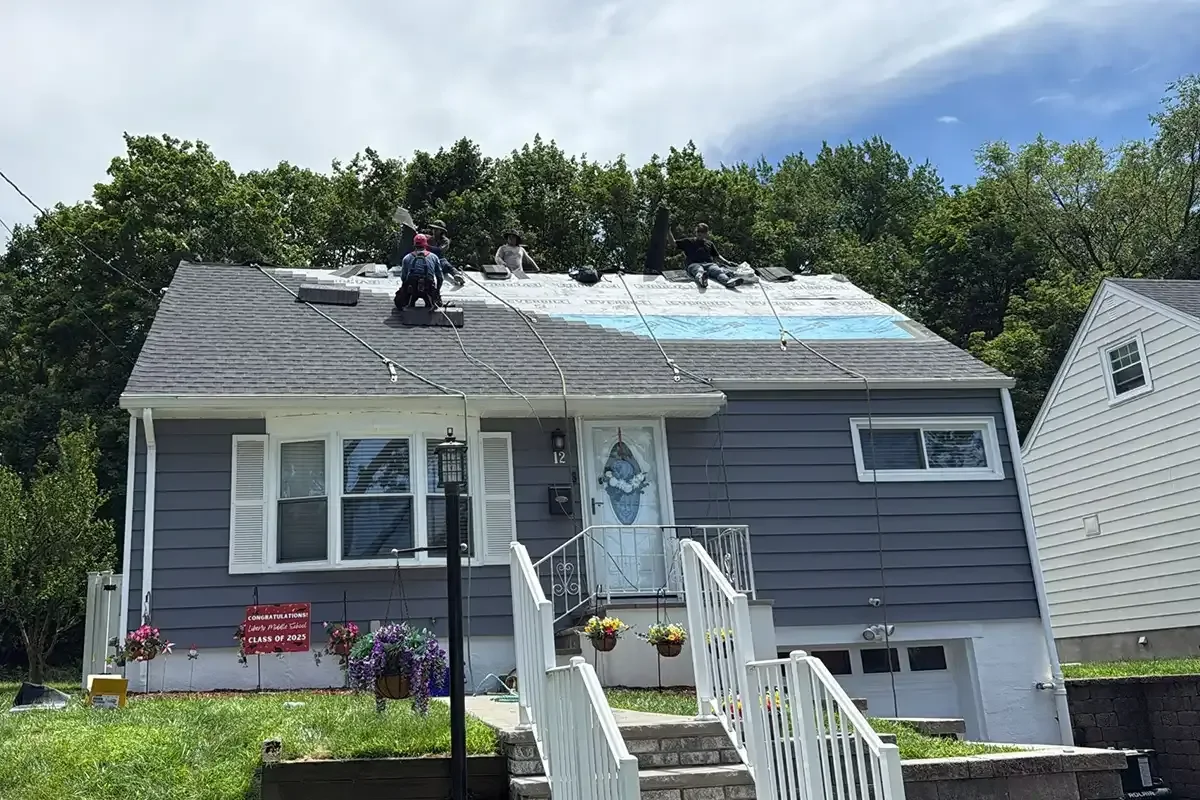
Agree on access and staging
Ask where vehicles, materials and disposal equipment are expected to go. Discuss gates, driveways, shared access and anything that may affect arrival or movement around the property. Clear instructions are particularly helpful for attached homes and properties with limited space. The plan should be agreed for your site rather than assumed from another job.
Talk about the people who use the house
Explain occupancy, pets and any accessibility needs relevant to the work area. Ask which entrances should remain clear and how the team will communicate changes. Noise and activity can affect the day’s routine, so it helps to understand the proposed working arrangements in advance. Do not assume a particular daily schedule until it is confirmed.
Identify items to protect
Discuss landscaping, outdoor furniture and fragile belongings near the work area. Ask what protection is included and what the owner should move beforehand. If attic access is part of the scope, clarify how it will be arranged. The right preparation depends on the building and agreed work, not a universal checklist.
Know the decision process
Confirm who is authorized to discuss findings and approve changes. Ask how hidden conditions will be documented and how cleanup and final review are handled. Keep the written scope available. This article is a planning aid, not a statement of guaranteed procedures for every Effective project; your agreed proposal should set out the actual arrangements.
General educational information. A property assessment and written scope determine appropriate work; this article does not establish pricing, availability or coverage.
Discuss your roof →Related reading
Repair or replace? Start with the condition, not the sales pitch.
A useful decision compares the extent of the problem, the surrounding roof and the scope of each option.
What actually belongs in a roofing estimate?
Read beyond the total: scope, access, details and assumptions can explain why proposals differ.
Material and workmanship warranties: ask for the documents.
Understand who makes each promise and what the written terms actually cover.